China has become a major sourcing destination for Elastic Yarn, offering broad capacity, competitive pricing, and specialized manufacturing experience. Global buyers, however, need more than a low quotation. They must examine yarn recovery, denier consistency, heat resistance, winding quality, and production traceability. A supplier may present bright samples, yet performance can change after repeated stretching and washing. That difference matters in sportswear, underwear, socks, medical textiles, and fitted home fabrics.
Dr. Subhash K. Batra, a respected textile researcher, has emphasized, “Textile quality is never accidental; it reflects controlled processes.” This principle remains practical when evaluating Chinese manufacturers. Buyers should inspect raw material records, laboratory reports, knitting trials, and batch inspection procedures. A reliable factory can explain its covered yarn structure, spandex content, tension control, and packaging method without vague promises. Small details matter. Even the carton label can reveal production discipline.
This guide introduces leading China Elastic Yarn manufacturers for global buyers. It considers technical capability, customization, export experience, certifications, and communication reliability. Factory visits and independent testing remain valuable, especially for large orders. Online presentations are useful, but they cannot replace physical sampling. Some suppliers may appear equally capable at first glance. They are not always equal under pressure, deadlines, or inconsistent raw materials. Buyers should also reflect on their own specifications, because unclear requirements can create avoidable disputes. The strongest partnership combines verified performance, realistic delivery expectations, and honest technical dialogue. Perfect sourcing does not exist. Careful verification comes close.
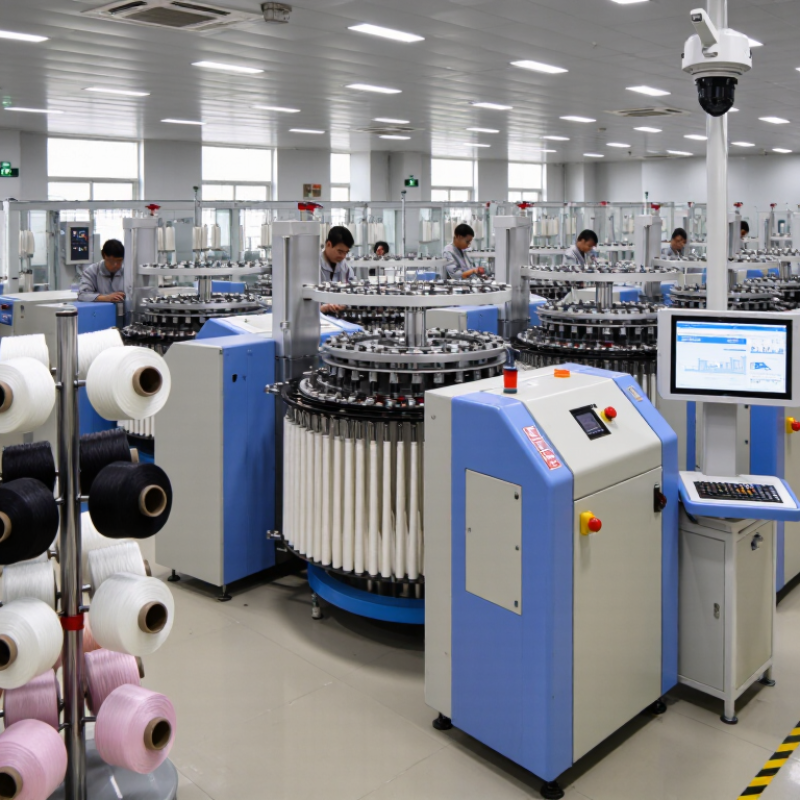
Elastic yarn is not one uniform material. Spandex, also called elastane, provides stretch and recovery inside many textile constructions. Its performance depends on denier, draw ratio, heat setting, and finishing conditions. A yarn may stretch well in testing but lose recovery after repeated washing. That difference matters.
Covered yarn wraps spandex with another filament or staple fiber. Single-covered yarn usually offers moderate protection, while double-covered yarn improves coverage and surface stability. Air-covered yarn uses compressed air to entangle spandex and outer fibers at intervals. It feels lighter and often suits socks, seamless garments, and flexible fabrics. Core-spun yarn places spandex inside a fiber sheath, commonly polyester, nylon, cotton, or viscose. The result resembles a conventional spun yarn but retains useful elasticity.
For global buyers evaluating Chinese manufacturers, factory evidence matters more than a polished sample. Ask for yarn counts, spandex content, elongation, recovery, tensile strength, and shrinkage data. Request test conditions, because results can change with temperature, gauge length, and holding time. Check winding quality under bright light. Uneven tension may create stripes during knitting. Small defects become expensive at scale.
A smooth sample can still mislead. Storage humidity, aging, and lubricant variation deserve attention. Some buyers focus only on stretch percentage, which is an incomplete measure. The better question is whether the yarn keeps stable performance after knitting, dyeing, and repeated use. Trial orders should include several lots, not one carefully selected cone. That approach costs more initially, but it exposes inconsistencies before mass production.
Spandex content varies by yarn design and end use. Bare spandex provides the highest elasticity, while covered, air-covered, and core-spun yarns combine spandex with one or more textile fibers for improved protection, appearance, handle, and processability. The ranges shown are representative industry values rather than company-specific specifications.
China’s elastic yarn manufacturers serve global buyers with products designed for socks, seamless garments, sportswear, and medical textiles.
A key specification is stretch, often listed between 500% and 800%. This figure means the yarn can extend five to eight times its original length under defined conditions. It does not automatically indicate strong recovery or long service life.
Experienced buyers should request test samples and a clear test method. Stretch results can change with gauge length, loading speed, temperature, humidity, and preconditioning. A yarn tested from a 10-centimeter length may behave differently during knitting. Small details matter. Ask suppliers to report elongation, breaking force, and recovery separately.
ISO 2062 tensile testing provides a recognized method for measuring yarn breaking force and elongation. The report should identify the equipment, specimen count, conditioning process, and test speed. Consistent results across multiple lots suggest better production control. However, ISO 2062 does not fully measure repeated-cycle recovery, fatigue, or fabric-level comfort. That limitation deserves attention. Buyers may add cyclic stretch tests, wash testing, and visual inspection after knitting. A practical supplier should explain unusual results instead of hiding them behind a rounded percentage. Some claims may still need independent verification.
China’s elastic yarn sector combines large-scale spinning capacity with specialized production lines. Many factories handle spandex covering, air covering, twisting, winding, and packaging under one roof. Capacity is visible. Monthly output figures, however, need verification through machine counts, shift schedules, and recent production records. A practical buyer should compare quoted capacity with lead times for sample orders, repeat orders, and peak-season demand. That gap often reveals more than a brochure.
Technology affects consistency, not just speed. Modern tension-control systems can reduce uneven covering and improve yarn stability during knitting. In my supplier evaluations, I ask for denier tolerance, elongation, recovery, oil content, and test methods. A retained sample from each lot makes later claims easier to examine. Factory laboratories should show calibrated instruments, inspection logs, and batch traceability. Small details matter. Yet equipment alone proves little. Operator training and preventive maintenance can decide whether quality survives a twelve-hour shift.
Export readiness includes more than English invoices. Experienced manufacturers should manage carton labeling, packing lists, certificates, booking schedules, and destination-specific documentation. They should also explain moisture protection during container loading, especially for long ocean routes. I prefer a controlled trial order before approving large volumes. It exposes weak communication, unstable shade matching, or delayed test reports. No factory is perfect. I would question any supplier promising zero variation. A credible partner identifies limits, records corrective actions, and responds with evidence rather than confident words.
| Manufacturing Region | Relevant Supply-Chain Position | Indicative Capacity Signal | Common Elastic-Yarn Technologies | Typical End-Use Linkages | Export Readiness | Buyer Verification Priorities |
|---|---|---|---|---|---|---|
| Zhejiang | One of China’s most concentrated textile manufacturing areas, with strong links among filament-yarn suppliers, covered-yarn processors, knitting mills, dyehouses, and garment exporters. | High cluster depth Suitable for both standard repeat orders and coordinated textile-supply projects. |
Air-covered yarn Single-covered yarn Double-covered yarn Precision winding | Seamless apparel, hosiery, underwear, sportswear, circular knitting, and narrow fabrics. | Generally strong because the region has extensive experience with container exports, international textile testing, and documentation for overseas buyers. | Confirm spandex percentage, covering ratio, elongation recovery, package format, lot consistency, and availability of shipment samples. |
| Jiangsu | Strong synthetic-fiber, textile-machinery, technical-textile, and large-scale fabric-production base with access to major logistics corridors. | High industrial scale Well suited to buyers requiring stable production planning and repeatable quality control. |
Covered filament yarn High-speed winding Automated package handling Technical yarn processing | Sportswear, compression products, warp knitting, woven stretch fabrics, and industrial textile applications. | Strong potential for export programs requiring structured quality systems, palletized packing, and scheduled production. | Request machine specifications, yarn uniformity results, tensile and elongation data, cone dimensions, and production lead-time commitments. |
| Fujian | Integrated sportswear, footwear, hosiery, knitting, dyeing, and garment ecosystem, particularly relevant to stretch apparel supply chains. | Medium to high cluster depth Efficient for apparel-linked orders and development cycles. |
Air-covered spandex Core-spun elastic yarn Fine-count yarn processing | Sportswear, socks, leggings, underwear, swimwear, and performance garments. | Good for buyers that need coordination between yarn supply, knitting, dyeing, and finished-garment production. | Check compatibility with the buyer’s knitting equipment, color-dyeing process, heat-setting conditions, and restricted-substance requirements. |
| Guangdong | Consumer-goods and apparel manufacturing hub with strong links to underwear, swimwear, fashion accessories, and export-oriented garment production. | Medium to high demand base Particularly practical for short development cycles and fashion-apparel programs. |
Covered elastane yarn Fine-gauge applications Small-lot development | Underwear, lingerie, swimwear, shapewear, fashion hosiery, and elastic accessories. | Strong commercial export experience, although product suitability should be checked carefully for each end-use and fabric construction. | Validate shade stability, chlorine and perspiration resistance where relevant, elastane exposure after knitting, and minimum order quantities. |
| Shandong | Large textile and industrial-manufacturing base with established cotton, synthetic, home-textile, and technical-textile capabilities. | Medium and application dependent More relevant where elastic yarn is part of a broader textile or technical-material program. |
Core-spun yarn Industrial stretch yarn Specialty yarn processing | Workwear, home textiles, technical fabrics, woven stretch materials, and selected apparel applications. | Export readiness varies by factory; established exporters can support standard documentation and international logistics. | Review factory specialization, export history, test-house capability, raw-material traceability, and product-specific compliance evidence. |
| Product Category: Air-Covered Yarn | Elastane is wrapped with one or more filament yarns by compressed air, creating a flexible yarn commonly used in knitted products. | Widely available Often offered in multiple counts, covering ratios, and package sizes. |
Air interlacing, controlled covering tension, precision winding, and electronic package inspection. | Hosiery, underwear, sportswear, seamless garments, and circular-knit fabrics. | Export suitability depends on stable covering uniformity, clear packing specifications, and reliable lot traceability. | Test elongation, recovery, covering defects, yarn hairiness, package hardness, and knitting performance before bulk approval. |
| Product Category: Single- and Double-Covered Yarn | One or two filament layers are wrapped around an elastane core to improve appearance, protection, dimensional control, or fabric performance. | Broad industrial availability Double-covered constructions are selected when higher coverage or stability is required. |
Single covering, double covering, adjustable wrapping tension, and controlled winding speed. | Fine hosiery, lingerie, swimwear, medical textiles, and premium stretch fabrics. | Suitable for global sourcing when the supplier can provide consistent construction data and application-specific samples. | Specify core size, outer-filament material, covering direction, number of covers, twist or wrapping parameters, and finished-yarn linear density. |
| Export Compliance and Quality Control | International buyers commonly evaluate chemical compliance, physical performance, packaging, traceability, and documentation before approving a supplier. | Standard buyer requirement Compliance capability must be verified at factory and shipment level. |
In-house inspection combined with qualified third-party testing where required by the destination market or end customer. | All apparel, textile, medical, home-textile, and technical-textile applications. | Key indicators include commercial invoice and packing-list accuracy, HS classification review, country-of-origin information, test reports, and export packaging control. | Ask for ISO 2062 or equivalent tensile-testing data where applicable, linear-density results, elongation and recovery data, REACH-related declarations for EU sales, and valid transaction-specific certificates. |
China Best Elastic Yarn Manufacturers for Global Buyers
Comparing elastic yarn manufacturers requires more than checking price lists. Denier shows yarn thickness and affects fabric weight, coverage, and machine settings. Ask for the tested denier range, not only the nominal figure. Elongation describes how far the yarn stretches under defined conditions. Recovery shows how well it returns afterward. These results depend on temperature, testing speed, and load. Request test conditions with every report. Otherwise, two similar percentages may not mean the same performance.
MOQ can reveal a supplier’s production flexibility. A low MOQ may suit trial orders, while a higher MOQ can reduce unit costs for stable programs. Check whether the MOQ applies per color, denier, or total order. Lead time should include material preparation, production, inspection, and packing. In practice, a quoted ten-day schedule may change during peak seasons. Build a buffer. It is not elegant, but it protects delivery plans.
Tips: Send a clear fabric sample or end-use description. Request three small lots when possible. Compare elongation and recovery after washing, heat exposure, and repeated stretching. Record the test date and batch number. A perfect specification sheet can still hide inconsistent winding or uneven tension. That mistake is easy to miss. One overlooked detail can affect an entire production run.
For global buyers comparing Chinese elastic yarn manufacturers, price should not be the only concern. Compliance needs review at the fiber, dye, and finished-yarn stages. OEKO-TEX® documentation can help verify restricted substances in tested materials. Ask for the certificate number, scope, validity date, and product class. A mismatched scope creates false confidence. Details matter here.
REACH review should cover substances of very high concern and supplier declarations. For products involving electrical or electronic applications, RoHS evidence must match the yarn’s actual use. This point is often misunderstood. Elastic yarn may enter a finished product without being a standalone electrical component. Request recent laboratory reports, material declarations, and batch traceability records. Check lot numbers against cartons and production dates. Documentation can lag.
ASTM D2256 testing measures tensile properties through defined sampling and conditioning practices. Buyers should confirm test speed, specimen preparation, elongation, and breaking force. Ask whether results represent production lots or only development samples. In practice, this distinction can prevent difficult claims later. Still, no document replaces a retained sample and independent verification. Samples still matter. Manufacturers should explain deviations openly, even when results are inconvenient.
Elastic yarn combines stretchable material with other fibers or filaments. Spandex provides stretch and recovery. Performance depends on denier, draw ratio, heat setting, and finishing.
Covered yarn wraps spandex with filament or staple fiber. Double-covered yarn offers greater surface protection. Air-covered yarn uses compressed air to entangle fibers. Core-spun yarn places spandex inside a fiber sheath.
Air-covered yarn often suits socks, seamless garments, and flexible fabrics. It feels relatively light. Core-spun yarn resembles ordinary spun yarn and keeps useful elasticity.
No. It only describes extension under defined test conditions. It does not prove strong recovery or long service life. Recovery matters more after repeated washing and stretching.
Request elongation, recovery, breaking force, tensile strength, shrinkage, and denier. Ask for temperature, humidity, gauge length, loading speed, and holding time. Details matter.
ISO 2062 measures yarn breaking force and elongation. Reports should show equipment, specimen count, conditioning, and test speed. The method does not fully measure fatigue or repeated-cycle recovery.
Request samples from several lots, not one selected cone. Record batch numbers and test dates. Inspect winding under bright light. Uneven tension may create stripes during knitting. Small defects spread.
Test yarn after knitting, dyeing, washing, heat exposure, and repeated stretching. Review storage humidity, aging, and lubricant variation. A smooth sample can still mislead. I would verify the claims independently when possible.
Confirm whether MOQ applies per color, denier, or total order. Include material preparation, production, inspection, and packing in lead-time estimates. Peak seasons may extend delivery. Build a buffer.
Elastic Yarn is a versatile material used in apparel, hosiery, sportswear, medical textiles, and other applications that require stretch, comfort, and shape retention. This guide explains the main product categories, including spandex yarn, covered yarn, air-covered yarn, and core-spun yarn, while highlighting important performance factors such as elongation, recovery, tensile strength, consistency, and durability. Many elastic yarn products can provide approximately 500–800% stretch, but actual performance depends on composition, denier, processing method, and end use. Reliable tensile evaluation should follow recognized methods such as ISO 2062 and ASTM D2256.
China offers a broad manufacturing base with advanced spinning, covering, testing, and export capabilities. Global buyers should compare suppliers by denier accuracy, elongation, recovery rate, minimum order quantity, lead time, production capacity, quality control, and communication efficiency. Compliance documentation is also essential, including OEKO-TEX®, REACH, RoHS, and applicable market-specific requirements. A structured evaluation helps buyers select stable, traceable, and suitable Elastic Yarn solutions for international production needs.

Yibang Textile