China has become an important sourcing destination for Covered Rubber Yarn used in socks, underwear, sportswear, medical textiles, and elastic fabrics. Manufacturers and suppliers often provide different rubber cores, covering materials, yarn counts, stretch levels, and packaging options. These differences can strongly affect comfort, recovery, durability, and production consistency.
This guide introduces leading Chinese suppliers through practical purchasing considerations. It examines manufacturing experience, equipment, quality control, product customization, delivery capability, and communication standards. Reliable producers should explain their rubber composition, covering method, elongation range, tensile performance, and recommended applications. Factory audits, sample testing, and technical discussions can reveal details that catalogues often hide. A clean workshop matters. So does stable winding.
The best supplier depends on your fabric structure and production conditions. A yarn suitable for swimwear may not perform well in compression garments or fine hosiery. Buyers should compare test reports, sample results, minimum order quantities, certifications, and after-sales support. Pricing deserves attention, but the lowest quotation may create higher replacement costs later. No supplier list is perfect. Product data can change, and some claims still require independent verification. For this reason, the following overview focuses on evidence, practical experience, and transparent comparison. It aims to help international buyers identify dependable partners for long-term Covered Rubber Yarn sourcing in China. Supplier selection is never automatic. Careful questions usually produce better results.
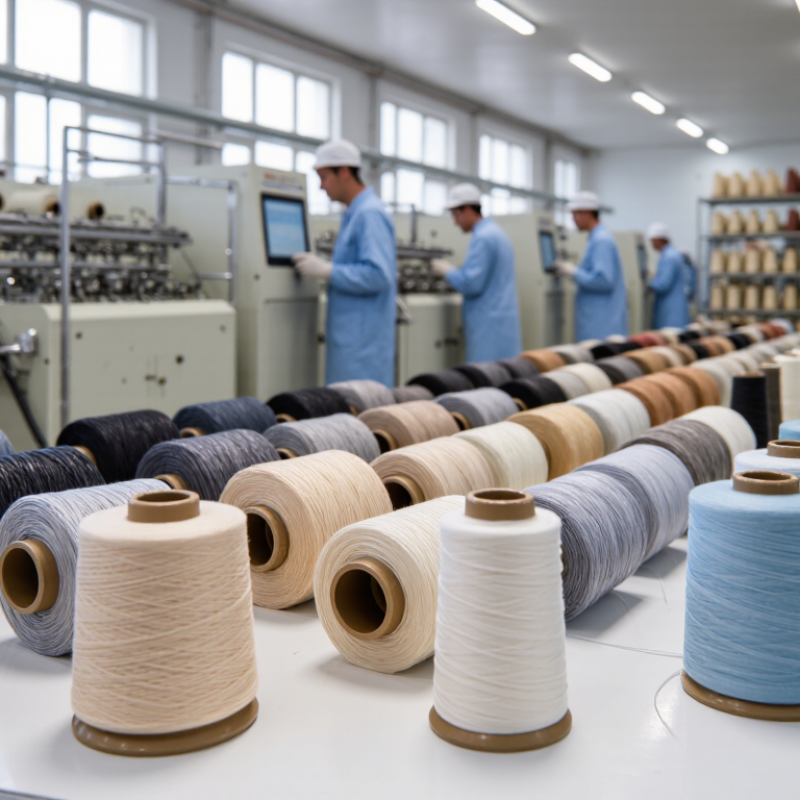
Covered rubber yarn has an elastic rubber core wrapped with textile filaments, such as nylon, polyester, or cotton. The outer covering protects the core and improves handling, softness, and color compatibility. When stretched, the core extends; when released, it pulls the fabric back toward its original shape.
It is commonly knitted into sock cuffs, underwear waistbands, sportswear panels, shapewear, and fitted medical textiles. You can also find it in swimwear edges and selected glove components. In production, engineers check elongation, recovery, tensile strength, covering uniformity, and resistance to washing. ASTM textile test methods can support these evaluations, but test results still depend on yarn structure and finishing conditions. It is not magic.
The commercial context is significant. Textile Exchange reported that global fiber production reached about 124 million tonnes in 2023 and may approach 160 million tonnes by 2030. That growth increases attention on material efficiency, durability, and responsible sourcing. Covered rubber yarn uses relatively small quantities per garment, yet poor tension control can create uneven edges, pressure points, or early loss of elasticity. A 2024 market review by Grand View Research also identified rising demand for stretch textiles in apparel and healthcare applications, although estimates vary by report methodology. Manufacturers should therefore verify recovery after repeated stretching, not only initial elasticity. This is where many specifications feel incomplete. Lower-cost yarn may perform well during sampling but weaken after heat, sweat, and repeated laundering. Clear fiber declarations and traceable quality records make supplier comparisons more reliable.
Covered rubber yarn is an elastic yarn made by wrapping one or more textile filaments around a rubber or elastomeric core. The table below summarizes commonly traded covered rubber yarn specifications, construction options, applications, and key purchasing factors. Actual values vary according to the core, covering material, production process, and end-use requirements.
| Data Dimension | Typical Industry Data | Why It Matters | Common Applications |
|---|---|---|---|
| Basic Construction | An elastic rubber or elastomeric core wrapped with one or more layers of textile yarn. | The covering protects the elastic core and improves handling, appearance, dyeability, and compatibility with knitting or weaving equipment. | Stretch fabrics, narrow fabrics, socks, underwear, medical textiles, and apparel waistbands. |
| Covering Types | Single-covered yarn, double-covered yarn, air-covered yarn, and mechanically covered yarn. | Different constructions influence stretch recovery, torque, surface coverage, bulk, and production cost. | Single covering is common for general-purpose fabrics; double covering is selected for improved stability and reduced elastomer exposure. |
| Core Material | Natural rubber, synthetic rubber, or elastane-based elastic cores, depending on the required performance. | Core chemistry affects elongation, recovery, heat resistance, aging behavior, and resistance to chemicals or perspiration. | Natural-rubber cores are used in many general elastic products; synthetic or elastomeric cores are used when specific durability or processing properties are required. |
| Covering Fiber | Common covering fibers include polyester, nylon, cotton, rayon, and polypropylene. | Fiber selection controls softness, moisture management, abrasion resistance, dyeing behavior, cost, and compatibility with the final fabric. | Polyester and nylon are widely used for durable stretch fabrics; cotton and rayon are selected for a softer or more natural surface feel. |
| Common Yarn Size Range | Commercial products are available in a broad range, commonly specified by denier, dtex, or yarn count rather than by one universal size. | A finer yarn supports lightweight fabrics, while a heavier yarn provides greater cover, compression, and elastic force. | Fine sizes for hosiery and lightweight apparel; medium and heavy sizes for waistbands, bra components, narrow fabrics, and industrial elastic products. |
| Stretch Performance | Elongation and recovery depend on the core type, draw ratio, covering tension, yarn size, and test method. Product specifications should state the test conditions. | Stretch figures measured under different loads, gauge lengths, or recovery times are not directly comparable. | Compression garments, fitted sportswear, swimwear, underwear, socks, gloves, and elastic tapes. |
| Covering Direction | S-twist and Z-twist coverings are both used; double-covered yarn may combine opposite covering directions. | Twist direction affects torque, fabric spirality, knitting performance, and the balance of the finished textile. | Knitted fabrics, circular knitting, warp knitting, woven stretch fabrics, and narrow elastic goods. |
| Heat and Processing Considerations | Heat-setting, dyeing, washing, and finishing temperatures must be matched to the elastic core and covering fiber. | Excessive heat or unsuitable chemical treatment can reduce recovery, cause shrinkage, or damage the covering. | Dyeing houses, knitting mills, weaving mills, garment production, and textile finishing operations. |
| Quality-Control Items | Linear density, winding quality, covering uniformity, tensile behavior, elongation, recovery, appearance, splice frequency, and package consistency. | Consistent yarn quality reduces knitting defects, uneven fabric stretch, barre, breakage, and rejected finished goods. | Suitable for buyers comparing samples, production lots, inspection reports, and incoming-material specifications. |
| Certification and Compliance | Depending on the market, buyers may request OEKO-TEX® STANDARD 100, REACH-related declarations, restricted-substance testing, or recycled-content documentation. | Compliance requirements vary by country, product category, and intended consumer use; certificates should be verified for the specific material and production site. | Apparel, baby textiles, intimate wear, sportswear, medical textiles, and export-oriented textile products. |
| Packaging and Storage | Yarn is generally supplied on cones or other textile packages and should be protected from direct sunlight, excessive heat, moisture, ozone, and contamination. | Improper storage can contribute to aging, package deformation, changes in tension, and reduced elastic performance. | Warehouses, knitting factories, garment manufacturers, elastic-product converters, and textile distributors. |
| Supplier Evaluation Criteria | Compare construction, core material, covering fiber, yarn size, twist, test data, lot consistency, sample approval, packaging, lead time, and traceability. | A lower quoted price may not represent lower total cost if the yarn causes machine stoppages, fabric defects, or inconsistent recovery. | International sourcing, private-label textile production, contract manufacturing, and long-term material supply programs. |
Note: Covered rubber yarn specifications are not standardized into one universal product range. Buyers should request a technical data sheet and confirm test methods, tolerances, sample performance, and application suitability before placing a production order.
When evaluating Chinese covered rubber yarn suppliers, inspect technical capability before comparing prices. Ask for the rubber core diameter, covering fiber, yarn count, twist, elongation, and recovery data. A capable supplier should explain how tension, heat, and winding speed affect performance. Request recent batch records, not only a polished product sheet. Short samples help. Measure them after stretching, washing, and resting for 24 hours. Note uneven covering, odor, broken filaments, or slow recovery.
A reliable factory should provide traceable lot numbers, incoming material checks, and final inspection records. Verify whether testing uses consistent gauges, temperatures, and extension rates. Otherwise, two suppliers may report different results for the same yarn. Ask to see equipment in operation, including winding machines and tensile testers, through a live video or audit. Production capacity matters, but claimed output can be optimistic. Compare monthly capacity with actual lead times, minimum order quantities, and replacement procedures for defective lots.
Communication reveals professionalism. Technical answers should be specific, documented, and consistent across sales and quality teams. Check export experience, packaging details, moisture protection, and labeling before placing a trial order. Independent laboratory testing adds confidence for critical applications. Certificates are useful, but they do not replace testing. I have found that small trial orders expose problems large samples hide. Even careful evaluations can miss seasonal variation or a new operator’s mistake. Keep written specifications, approved samples, and inspection limits in the purchase file.
China’s leading covered rubber yarn manufacturers compete through consistency, not only low pricing. Their yarn usually combines a rubber core with nylon or polyester covering. This structure protects elasticity and supports smooth feeding on knitting machines. Common options include single-covered and double-covered constructions. Each suits different fabric tension, recovery, and surface requirements. Experienced factories adjust core size, twist, color, and winding length. I have found production details matter more than polished product photos. A clean workshop helps, but it proves little alone.
Reliable Chinese suppliers document their production controls from incoming materials to final winding. Technical teams should measure elongation, recovery, breaking force, and covering uniformity. They should also record batch numbers and inspection results. Ask for recent test reports and production samples before placing larger orders. Do not accept a generic specification without tolerance ranges. Small sample lots reveal uneven covering, loose winding, or inconsistent stretch. Some suppliers communicate quickly but explain technical limits poorly. That weakness deserves attention.
For overseas buyers, clear communication is essential when selecting covered rubber yarn manufacturers in China. Confirm core material, covering fiber, yarn count, color standard, and packaging details. Storage conditions also matter because heat and moisture may affect rubber performance. Lead times can change during peak production periods. I would leave room for realistic scheduling rather than trusting the shortest promise. Price is only one purchasing factor. A dependable supplier responds to defects with evidence, corrective action, and revised samples. Even experienced buyers can overlook winding tension during approval.
China’s covered rubber yarn sector serves hosiery, sportswear, medical textiles, and narrow fabrics. Product choice starts with the core. Common options include natural rubber yarn, synthetic elastomer yarn, bare rubber thread, and covered yarn. Covered yarn may use polyester, nylon, or cotton wrapping. Single-covered yarn gives moderate stretch. Double-covered yarn offers better stability and a smoother surface.
Quality depends on measurable performance, not appearance alone. Buyers should request tests for tensile strength, elongation, elastic recovery, fatigue, aging, and dimensional consistency. ISO 37 and ASTM D412 are widely used for rubber tensile testing. ISO 2062 can help assess textile yarn strength. For skin-contact products, restricted-substance screening and OEKO-TEX Standard 100 certification are useful checkpoints. Textile Exchange’s Materials Market Report 2024 reported global fiber production at about 124 million tonnes in 2023, with continued growth expected toward 2030. That pressure makes traceability more important.
Customization can include core diameter, rubber composition, covering material, color, twist, stretch percentage, and package size. A factory should provide samples before mass production. Ask for batch records and test results. Small differences in winding tension can change fabric recovery. This is often overlooked. Buyers may also request heat resistance, chlorine resistance, or low-temperature performance for specific applications. Supplier claims still need verification. A laboratory report is stronger than a catalog promise, although even laboratory testing cannot fully predict every knitting condition.
Selecting a Chinese covered rubber yarn supplier requires more than comparing quotations. The WTO World Trade Statistical Review 2024 reports that China supplied about 36% of global textile exports in 2023. This scale creates options, but quality can vary between factories. Use UN Comtrade HS 5604.10 records to review export activity, then request production evidence for the exact yarn structure.
Ask for samples with documented yarn count, rubber-core size, covering ratio, elongation, and recovery after repeated stretching. Test them under your real knitting or weaving conditions. A supplier may show excellent laboratory figures, yet fail after dyeing or heat exposure. Request recent batch reports, traceability records, and details about latex or rubber formulation. Verify whether testing follows relevant ISO or ASTM methods.
Audit the factory, remotely or in person. Check winding tension, humidity control, storage conditions, and final inspection procedures. Compare three batches, not one sample. That costs more time. It also reveals inconsistency.
Commercial reliability matters too. The World Bank’s Logistics Performance Index 2023 ranked China 19th among 139 economies, with a score of 3.7 out of 5. Still, logistics performance does not guarantee supplier discipline. Confirm lead times, minimum order quantities, packaging, inspection rights, and replacement terms in writing. A lower price may hide unstable recovery or excessive yarn hairiness. I would treat unverified certifications as incomplete evidence and ask for issuing-body confirmation before approval.
This chart presents a practical buyer-side weighting model for comparing Chinese covered rubber yarn suppliers. Product consistency and compliance should receive the highest priority, followed by delivery capability, testing documentation, customization, and communication. Buyers can adjust the weights according to their application, order volume, and target market requirements.
Ask for core diameter, covering fiber, yarn count, twist, elongation, and recovery data. The supplier should explain how tension, heat, and winding speed affect performance. Vague answers are warning signs.
Stretch, wash, and rest the sample for 24 hours. Then check recovery, surface smoothness, odor, broken filaments, and uneven covering. Measure several pieces, not only one.
Request lot numbers, incoming material checks, and final inspection records. Recent batch records are more useful than polished product sheets. Keep approved samples and written limits in your purchase file.
Results can change with different gauges, temperatures, and extension rates. Two suppliers may report different results for identical yarn. Ask for the exact testing conditions and equipment details.
Yes. Request a live video or factory audit. View winding machines and tensile testers in operation. Photos may hide maintenance problems. They are not enough.
Options include natural rubber yarn, synthetic elastomer yarn, bare rubber thread, and covered yarn. Covering materials may include polyester, nylon, or cotton. Single covering offers moderate stretch. Double covering improves stability and surface smoothness.
Request tensile strength, elongation, elastic recovery, fatigue, aging, and dimensional consistency tests. Heat, chlorine, or low-temperature testing may suit special applications. A laboratory report helps, but it cannot predict every knitting condition.
Discuss core diameter, rubber composition, covering material, color, twist, stretch, and package size. Request samples before mass production. Compare claimed capacity with lead times and minimum order quantities. Small trial orders often reveal problems hidden by large samples.
Request restricted-substance screening and relevant safety documentation. Confirm packaging, moisture protection, labeling, and traceability. Independent testing adds confidence. Still, seasonal changes or operator mistakes may escape careful checks.
Covered Rubber Yarn is an elastic core yarn wrapped with one or more layers of textile fibers, combining stretch, recovery, softness, and improved surface protection. It is widely used in socks, sportswear, underwear, medical textiles, waistbands, gloves, and other knitted or woven products that require flexibility and comfort. This article explains the main product categories, including different core materials, wrapping structures, yarn counts, elasticity levels, and color options, while also introducing common quality factors such as even covering, stable tension, elongation, recovery, strength, and durability.
For buyers seeking Chinese suppliers, the selection process should focus on manufacturing experience, equipment capability, quality-control procedures, testing documentation, production capacity, lead times, customization services, packaging, and communication efficiency. Requesting samples and confirming technical specifications before placing an order can help reduce quality risks. By comparing suppliers according to application requirements, compliance expectations, minimum order quantities, pricing, and after-sales support, buyers can choose a reliable partner and source Covered Rubber Yarn that performs consistently in finished textile products.

Yibang Textile