Nylon Covered Yarn can look consistent on a sample card yet behave differently on a production line. A slight change in nylon filament, elastane draft, covering direction, or twist can affect stretch, recovery, surface feel, and breakage. For global buyers, the challenge is not just finding a competitive price. It is confirming that the yarn performs reliably in the intended knitting or weaving process. Small details matter.
Textile Exchange’s Materials Market Report 2024 estimates that global fiber production reached 124 million metric tonnes in 2023, with polyester representing about 57% of total output. This broader market context does not measure covered-yarn quality, but it highlights the scale and complexity of fiber sourcing. Buyers still need product-specific evidence: clear specifications, traceable lot information, test methods, and samples evaluated under realistic machine settings. A polished datasheet is useful. It is not proof of consistent performance.
The seven tips ahead focus on practical checks, from confirming yarn construction to reviewing supplier capability and sample results. One limitation should be clear: no verifiable source material was provided for a named Nylon Covered Yarn specialist’s quotation, so I will not invent or misattribute one. That is worth reflecting on. Procurement guidance is more useful when its claims can be checked, even if that makes the introduction less dramatic.
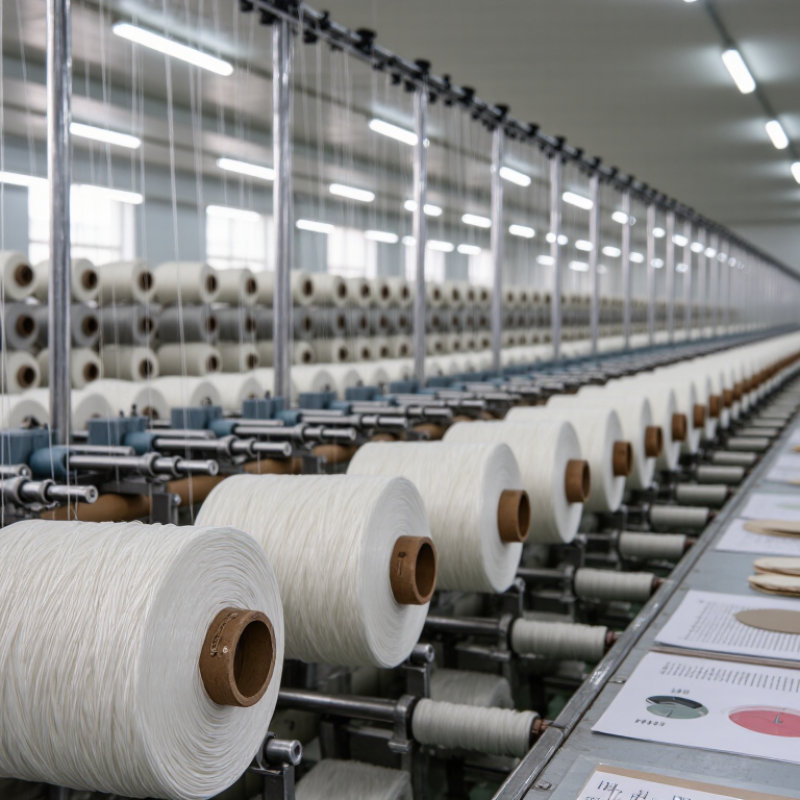
Nylon covered yarn is a stretch core yarn wrapped with nylon filaments. The core usually provides elasticity, while nylon adds softness, strength, and surface coverage. The wrapping may be single or double, depending on the required performance. The definition sounds simple, but yarn construction can vary between suppliers.
I have seen buyers confuse nylon covered yarn with ordinary nylon yarn. They behave differently during knitting. Covered yarn is often selected for socks, tights, seamless garments, sportswear, underwear, and fitted medical textiles. It can help fabric recover after stretching and create a smoother touch against the skin. It is not automatically suitable for every product.
Define the end use before comparing prices. A compression garment may require controlled stretch and consistent recovery. A lightweight sock may need softness, abrasion resistance, and stable dyeing. Check the core material, covering ratio, yarn count, elongation, recovery, and colorfastness. Ask for production samples, not only laboratory figures. Small differences can become visible after washing.
Some specifications remain easy to overlook. Machine tension, needle size, and finishing chemicals may change the final result. I once treated a yarn test as sufficient, but the knitted fabric behaved differently under repeated washing. That was a useful correction. Buyers should test the yarn in the actual fabric structure, even when the supplier’s data appears convincing.
Nylon covered yarn typically combines an elastic core, often elastane, with a nylon filament wrapping. It is used in hosiery, sportswear, underwear, swimwear, and other stretch textiles. The chart compares typical polymer melting points for two common nylon types; actual values vary by grade. When buying, confirm the yarn construction, intended end use, and heat-processing requirements with your supplier.
Nylon covered yarn can use a single or double covering around an elastic core. A single wrap is often lighter and more economical, but the core may show through under abrasion. Double covering adds protection and can improve yarn stability, though it may increase weight and cost. Compare the intended fabric use before choosing; a soft base layer and a hard-wearing waistband do not need the same construction.
Air-covered yarn joins nylon and elastane with compressed air rather than a continuous wrap. It can suit applications where a lighter hand and efficient processing matter. Mechanical covering uses a more defined nylon winding and gives buyers clearer control over cover density. Ask suppliers to identify the structure, covering direction, and number of wraps. Small details matter. A sample may feel smooth in the hand but behave differently after knitting or washing.
Check denier, filament count, elastic-core size, stretch, and recovery together. Denier alone does not describe the finished yarn’s performance. Request test conditions for elongation and recovery, plus color and lot consistency data. Ask for samples. Then test them on your own machine and fabric construction. A specification sheet can still leave gaps, especially around long-term recovery; note those uncertainties before approving a bulk order.
Nylon-covered yarn should be selected by the fabric it must support, not by a catalog description alone. For a fine-gauge stretch knit, a smooth, evenly covered yarn can help reduce barre and uneven surface effects. In a woven waistband, prioritize recovery after repeated extension and resistance to abrasion at contact points.
Small details matter. Ask the mill for the yarn count, core type, covering ratio, and recommended processing tension. Then compare those figures with your machine settings and fabric construction.
The end use changes the specification. Swimwear and activewear need dependable stretch recovery, while upholstery often places greater weight on wear resistance and dimensional stability. Check how the yarn behaves after dyeing, heat setting, and laundering; these steps can alter hand feel and extension.
Test swatches on the intended equipment, not just by pulling a loose strand by hand. Test before scaling. Record stitch or weave settings, fabric weight, and recovery results so suppliers can reproduce a successful trial.
A lab result is useful, but it may not predict every production line. A stronger yarn is not always a better choice; it can make the fabric feel stiff. That trade-off deserves discussion before purchase.
For nylon covered yarn, compare suppliers using the same specification: nylon denier, covering method, stretch range, twist, and intended end use. Ask for recent lot records, not only a polished catalog. Textile Exchange’s Materials Market Report 2024 estimates global fiber production reached 124 million tonnes in 2023, underscoring the scale of sourcing and traceability challenges. That figure does not prove a supplier’s quality. Verify claims against production records and test results.
Tips: Request samples from at least two production lots. Check shade, winding, package edges, and yarn slippage under your actual machine settings. Test elongation and breaking force using an agreed method, such as ISO 2062. Keep a sealed control sample. Small differences can matter.
Review the supplier’s quality-control plan, including calibration records, sampling frequency, defect limits, and corrective-action reports. Ask whether recycled-content claims have traceable documentation, and confirm that any certificate covers the specific site, process, and product—not just the company. A certificate alone is not a performance test. One practical detail is often overlooked: sample approval should record machine speed and operating conditions. Buyers sometimes skip this step; later, the approved yarn behaves differently on the production floor.
When comparing nylon covered yarn quotes, check more than the price per kilogram. Match the yarn count, nylon type, core material, coverage turns, color, and packing method. A lower quote may reflect a different specification. Details matter. Ask whether the quoted price includes cones, cartons, and export packing, and confirm the currency and quote validity period.
Tips: Request a written order sheet showing the agreed specification, minimum order quantity, payment schedule, and tolerance for weight or quality. Confirm how changes are handled after approval. A sample can help, but it may not represent every production lot. I would still verify the first bulk shipment against the approved details.
Tips: Ask for separate estimates for production time and transit time. Confirm the expected dispatch date, shipping method, named delivery point, and who arranges freight and insurance. Check which shipping documents will be provided, such as the packing list and commercial invoice. Build in a small buffer for delays; schedules can shift, and my own planning has occasionally been too optimistic.
| Buying tip | What to confirm | Useful details to include | Buyer check |
|---|---|---|---|
| 1. Define the yarn construction | Specify whether the yarn is single-covered or double-covered, and identify the core and covering yarns. | Core material and count; nylon type (such as nylon 6 or nylon 66); covering material, count, and number of wraps. | Ask for a written construction specification and a sample that matches it. |
| 2. Match technical specifications to the end use | Confirm linear density, stretch or elongation, recovery, color, and any required performance properties. | Record units consistently, such as dtex or denier for linear density, and state test methods and tolerances. | Test samples in the intended knitting or weaving process before approving bulk production. |
| 3. Compare prices on the same basis | Check currency, price unit, specification, quantity, packaging, and delivery term before comparing quotations. | Request the price per net kilogram and identify whether freight, insurance, duties, taxes, and export packing are included. | Compare like-for-like quotations; an EXW price is not directly comparable with a CIF or DDP price. |
| 4. Agree order terms and tolerances | Confirm minimum order quantity, production-lot size, payment schedule, cancellation terms, and specification tolerances. | State cone weight, cones per carton, net and gross weight, acceptable shade variation, and the process for handling nonconforming goods. | Put agreed specifications, inspection criteria, and remedies in the purchase order or contract. |
| 5. Verify production and dispatch lead times | Separate sample approval, raw-material procurement, production, inspection, and dispatch dates. | Ask for a dated production schedule and clarify whether the quoted lead time starts after deposit, specification approval, or both. | Treat any lead-time estimate as supplier- and order-specific; confirm it in writing before booking transport. |
| 6. Confirm shipping and delivery details | Agree the named place or port, delivery term, transport mode, and responsibility for freight and insurance. | Request carton dimensions, pallet details if applicable, gross weight, package count, shipping marks, and estimated ready date. | Use a clearly named Incoterms® rule and place, such as “FOB [port]” or “CIF [port],” in the quotation and order. |
| 7. Check documents and quality control | Confirm which export, shipping, and quality documents will be supplied and when they will be issued. | Common shipping documents include a commercial invoice, packing list, and transport document; certificates depend on the product and destination requirements. | Agree inspection timing, lot identification, test records, and document requirements before shipment. |
Note: Lead times, minimum order quantities, prices, and documentation requirements vary by specification, supplier, destination, and order conditions. Confirm current details in the written quotation and purchase agreement.
Match the yarn to the fabric structure and final use. Check yarn count, core type, covering ratio, and processing tension. A catalog description is not enough.
Choose smooth, evenly covered yarn. It can reduce barre and uneven surface effects. Test the yarn on the intended machine.
Focus on recovery after repeated extension. Check abrasion resistance at contact points. A very strong yarn may feel stiff.
Swimwear and activewear need reliable stretch recovery. Upholstery may need stronger abrasion resistance and dimensional stability. The best specification depends on use.
Dyeing, heat setting, and laundering can change hand feel and extension. Test fabric swatches after these steps. Do not judge only by pulling a loose strand.
Use the same specification for every supplier. Compare nylon denier, covering method, stretch range, twist, and intended use. Request samples from at least two production lots.
Check shade, winding, package edges, and yarn slippage. Measure elongation and breaking force with an agreed test method. Keep one sealed control sample.
Review calibration records, sampling frequency, defect limits, and corrective actions. Confirm certificates cover the exact site, process, and product. A certificate alone is not a performance test.
Record machine speed, tension, stitch or weave settings, and fabric weight. Production results may differ from laboratory results. Test before scaling.
Buying Nylon Covered Yarn requires more than comparing prices. Start by defining the yarn’s intended application, such as the type of fabric or finished product it will support. Compare yarn structures, covering methods, and key specifications, including yarn count, stretch, strength, and consistency. Then match these characteristics to the fabric’s construction and the demands of its end use, considering factors such as comfort, durability, and processing requirements.
Before placing an order, assess suppliers through clear product information, representative samples, documented quality controls, and relevant certifications. Confirm that the quoted price reflects the agreed specifications and order quantity, and clarify payment terms, production lead times, packaging, and shipping arrangements. A careful review of these details can help buyers reduce sourcing risks, avoid mismatched materials, and establish reliable supply for their manufacturing needs.

Yibang Textile