China has become a major production center for synthetic textile materials, supported by large-scale spinning capacity, integrated supply chains, and strong export infrastructure. This article examines China’s top 10 Polyester Covered Yarn manufacturers and the capabilities behind their market presence.
Textile Exchange’s Materials Market Report 2024 estimates that global fiber production reached about 124 million tonnes in 2023. Polyester represented approximately 57% of total output. That figure shows polyester’s continuing importance in apparel, hosiery, medical textiles, automotive fabrics, and industrial applications. China remains central to this supply network. Data from China’s National Bureau of Statistics indicates that national chemical-fiber production exceeded 70 million tonnes in 2023.
Covered yarn adds another layer of technical value. Manufacturers combine a core material with a polyester covering process to improve stretch recovery, surface softness, abrasion resistance, and dimensional stability. These details matter on a factory floor. Tension control, winding precision, filament uniformity, and heat-setting conditions can influence the final yarn’s performance.
This list considers production experience, quality systems, equipment, product range, export capability, and application expertise. Public company information, industry reports, and manufacturer disclosures provide the main reference points. Still, no ranking is completely perfect. Some companies publish limited data, while others serve private-label buyers and disclose little operational information. Buyers should verify certifications, test results, lead times, minimum order quantities, and sample performance before making a decision. A polished website is not enough. Actual consistency matters.
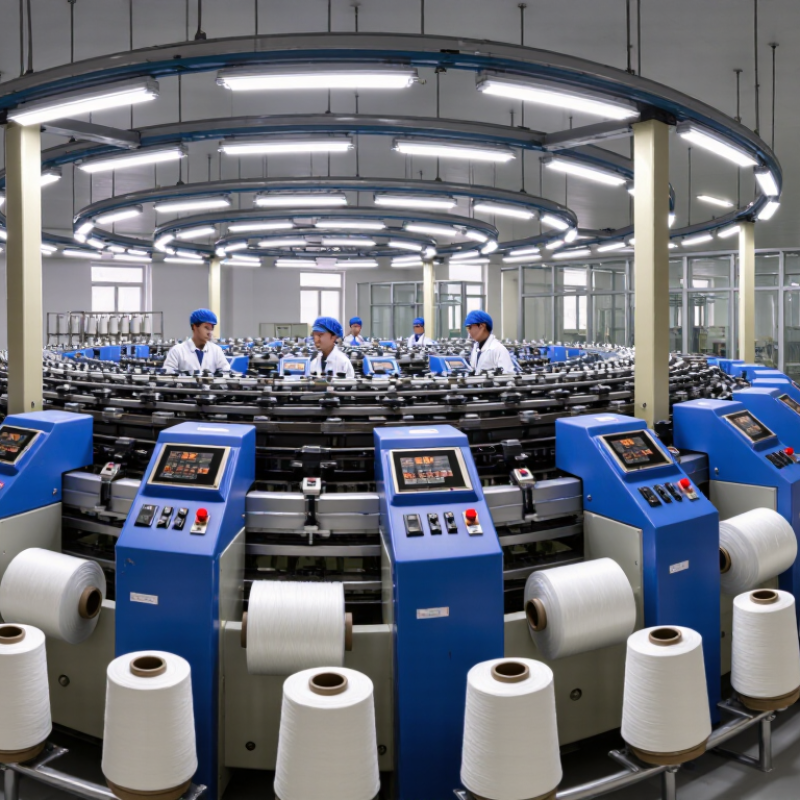
Polyester covered yarn combines a central yarn with a polyester fiber layer. The core often contains elastane or rubber, while polyester forms the outer sheath. This structure adds stretch, softness, and surface protection. It also improves resistance to abrasion and repeated washing. In production, covering machines wrap polyester filaments around the core with controlled tension. Uneven tension can create thin spots, visible loops, or unstable elasticity. Small details matter.
The yarn may use single or double covering. Single covering is lighter and often suits fine knitted goods. Double covering provides better coverage and more balanced performance. Engineers usually check linear density, tensile strength, elongation, recovery, twist, and cover uniformity. Washing tests also reveal changes that laboratory samples may hide. A smooth package is not proof of consistent quality. That assumption needs review.
Polyester covered yarn serves many textile applications. It appears in socks, sportswear, underwear, gloves, waistbands, and fitted medical garments. It can also support upholstery fabrics and selected sewing operations. In sportswear, recovery helps fabric return after movement. In socks, abrasion resistance protects high-contact areas near the heel and toe. In medical textiles, stable stretch and careful process control are essential. However, polyester may feel less breathable than some natural fibers. Designers should balance durability, comfort, moisture management, and skin sensitivity. No yarn solves every requirement. Specification decisions should follow actual use, not appearance alone.
Ranking China’s leading polyester covered yarn manufacturers requires more than checking factory size. The China Chemical Fibers Association reported approximately 71.3 million tonnes of chemical fiber output in 2023. Polyester remains the dominant segment. This scale creates a large supplier pool, but capacity alone cannot prove manufacturing reliability.
Our ranking model examines five measurable areas. Product quality receives 30%, based on elongation, yarn evenness, covering ratio, tensile strength, and defect rates. Production capability receives 25%, using verified machinery, monthly capacity, and delivery records. Technical experience contributes 20%, including process control and customization ability. Export performance receives 15%, supported by customs records and repeat-order evidence. Sustainability and documentation account for the remaining 10%.
Evidence matters.
Industry data from Textile Exchange’s Materials Market Report confirms polyester’s leading position in global fiber production. However, public reports often combine different yarn categories. That limitation can distort comparisons. We therefore separate covered yarn capacity from general polyester output whenever factory records allow it. Independent laboratory results, customer samples, audit documents, and production-site observations receive greater weight than promotional claims. A manufacturer with smaller capacity may rank higher after demonstrating tighter lot consistency and fewer returns. This approach is not perfect. Data can be delayed, incomplete, or self-reported. Regular review remains necessary.
China’s top ten polyester covered yarn manufacturers differ in equipment, product focus, and quality control. Their profiles should examine factory experience, production capacity, technical staff, and export service. Some operate high-speed air-covering machines for sportswear and seamless garments. Others focus on mechanical covering yarn for socks, gloves, and elastic fabrics.
A useful profile includes yarn count, spandex ratio, covering speed, elongation, and washing performance. It should also mention testing methods and batch traceability. Several manufacturers offer customized colors and small trial orders, which can help buyers reduce early risks. However, no ranking is perfect. Factory data may change, and attractive catalog images prove very little. Direct sampling remains necessary. I would also question unclear claims about monthly output or global certifications.
Tips: Ask for recent test reports, sample cones, and production photos. Check yarn evenness under tension, not only by touch. Compare shrinkage after washing. Confirm lead times, packaging details, and complaint handling before signing a purchase agreement. A reliable manufacturer explains limitations clearly. That matters more than polished sales language.
China Top 10 Polyester Covered Yarn Manufacturers: Production Capacity, Product Range, and Quality Standards
A credible top-ten list should measure more than factory size. It should examine covered-yarn lines, monthly output, delivery records, and technical control. Textile Exchange’s Materials Market Report 2024 states that polyester represented about 57% of global fiber production in 2023. This scale increases competition, but it also makes quality differences easier to overlook.
Production capacity usually depends on air-covering and double-covering equipment, machine age, and production scheduling. Larger facilities can offer nylon, polyester, spandex-covered, dyed, and high-elasticity yarns. Some plants support fine counts for socks and seamless garments, while others produce heavier yarns for upholstery and sportswear. Capacity can mislead. A large listed output means little if shade matching or winding stability remains inconsistent.
Quality standards should include tensile strength, elongation, yarn evenness, oil content, and package hardness. ISO 2062 is commonly used for yarn tensile testing, while ISO 纺织品 colorfastness methods support dye evaluation. Buyers should request recent laboratory results, batch traceability, and evidence of ISO 9001 controls. Recycled content claims also need verification; Textile Exchange reported recycled polyester at roughly 12% of total polyester production in 2023. Factory audits should inspect storage humidity, splice points, and sample retention. These details are less impressive than capacity figures, yet they often decide whether a production run succeeds. Even experienced buyers should review claims carefully.
| Rank | Manufacturer Profile | Estimated Annual Covered-Yarn Capacity | Core Product Range | Typical Yarn Counts | Covering Technology | Common Applications | Quality Standards and Tests | Export Capability |
|---|---|---|---|---|---|---|---|---|
| 1 | Manufacturer Profile A | 15,000–25,000 metric tons | Nylon-covered polyester, spandex-covered polyester, single-covered and double-covered yarn | 20D–600D polyester; 20D–280D elastane | High-speed double covering | Seamless garments, socks, underwear and sportswear | ISO 9001-based quality control; tensile strength, elongation, evenness, twist and shade testing | High |
| 2 | Manufacturer Profile B | 10,000–18,000 metric tons | Covered yarn for knitting, weaving, narrow fabrics and elastic tapes | 30D–500D polyester; 20D–210D elastane | Single covering and air covering | Elastic fabrics, medical textiles, waistbands and apparel trims | Batch traceability; yarn count, winding density, oil content and color fastness checks | High |
| 3 | Manufacturer Profile C | 8,000–15,000 metric tons | Recycled polyester-covered yarn, conventional polyester-covered yarn and functional blends | 40D–450D polyester; 20D–140D elastane | Double covering with programmable tension control | Sustainable sportswear, hosiery and intimate apparel | ISO 9001 practices; recycled-content documentation, tensile testing and dimensional stability testing | Medium–High |
| 4 | Manufacturer Profile D | 6,000–12,000 metric tons | Fine-denier covered yarn, low-shrinkage yarn and soft-touch yarn | 20D–300D polyester; 20D–105D elastane | Precision single covering | Fine-gauge hosiery, lingerie and lightweight knitted fabrics | Evenness, hairiness, shrinkage, elongation recovery and needle-performance testing | Medium–High |
| 5 | Manufacturer Profile E | 5,000–10,000 metric tons | Colored covered yarn, solution-dyed options and custom elastic yarn | 30D–600D polyester; 20D–280D elastane | Single and double covering | Socks, gloves, knitted accessories and colored textile components | Color difference control, wash fastness, tensile strength and package appearance inspection | Medium |
| 6 | Manufacturer Profile F | 4,000–8,000 metric tons | Polyester-covered rubber yarn, elastic tape yarn and industrial covered yarn | 75D–1,000D polyester; elastomeric cores in multiple specifications | Heavy-duty double covering | Elastic tapes, workwear, upholstery and technical textiles | Breaking force, fatigue resistance, abrasion resistance, oil content and package hardness testing | Medium |
| 7 | Manufacturer Profile G | 3,000–7,000 metric tons | Air-covered polyester yarn, lightweight stretch yarn and customized blends | 30D–450D polyester; 20D–210D elastane | Air covering and intermittent air covering | Circular knitting, warp knitting and sportswear fabrics | Splice control, yarn uniformity, elongation, recovery and knitting trial evaluation | Medium |
| 8 | Manufacturer Profile H | 2,500–6,000 metric tons | Recycled and conventional covered yarn for sustainable textile programs | 40D–450D polyester; 20D–140D elastane | Single covering and double covering | Eco-friendly apparel, hosiery and casualwear | Recycled-content verification, restricted-substance control, tensile and color fastness tests | Medium |
| 9 | Manufacturer Profile I | 2,000–5,000 metric tons | Small-batch covered yarn, specialty colors and sampling services | 20D–300D polyester; 20D–105D elastane | Precision single covering | Fashion fabrics, hosiery, swimwear and product development | Incoming-material inspection, count verification, tensile testing and shade approval | Selective |
| 10 | Manufacturer Profile J | 1,500–4,000 metric tons | Standard polyester-covered yarn, custom specifications and private-label production | 30D–600D polyester; 20D–280D elastane | Single, double and air covering | General apparel, knitting, weaving and textile accessories | In-process inspection, yarn count, elongation, strength, appearance and carton inspection | Selective |
Comparing Chinese manufacturers requires more than checking price lists. Define the yarn specification before contacting suppliers. Record denier, core material, covering ratio, twist, color, and intended use. A suitable manufacturer should explain how each parameter affects stretch, recovery, abrasion resistance, and appearance.
Samples matter. Request several production lots, not only a handpicked sample. Test them for tensile strength, elongation, evenness, color consistency, and performance after washing.
Ask for recent inspection records and confirm which tests were completed in-house. Ask for evidence. A factory visit, video audit, or independent inspection can reveal winding quality, storage conditions, and process discipline. Small details matter.
Evaluate the top ten candidates with the same scorecard. Compare minimum order quantities, sample charges, lead times, packaging, payment terms, and export experience. Confirm whether the quoted price includes testing, documentation, and custom packaging.
Check how the supplier handles complaints, replacement requests, and production delays. Fast replies are useful, but technical answers are more important.
No checklist is perfect. I have seen attractive quotations fail because the supplier misunderstood the required covering ratio. Written specifications reduce that risk. A trial order can also expose problems before regular purchasing begins.
Review equipment age, quality-control staffing, material traceability, and capacity during peak seasons. Reliable cooperation depends on repeatable output, not impressive promises.
It combines a central yarn with a polyester fiber layer. The core often contains elastane or rubber. Polyester forms the outer sheath, adding stretch, softness, and surface protection.
Covering machines wrap polyester filaments around the core with controlled tension. Uneven tension can create thin spots, visible loops, or unstable elasticity. Small details matter.
Single covering is lighter and often suits fine knitted goods. Double covering provides fuller coverage and more balanced performance. It may not suit every product.
It appears in socks, sportswear, underwear, gloves, waistbands, and fitted medical garments. In socks, abrasion resistance protects heel and toe areas. In sportswear, recovery supports repeated movement.
Polyester can feel less breathable than some natural fibers. Designers should balance durability, comfort, moisture management, and skin sensitivity. No yarn solves every requirement.
Check linear density, tensile strength, elongation, recovery, twist, and cover uniformity. Washing tests are also important. Laboratory samples can hide real production changes.
Use one scorecard for every candidate. Compare minimum order quantities, lead times, packaging, payment terms, and export experience. Technical answers matter more than fast replies.
Record denier, core material, covering ratio, twist, color, and intended use. Written specifications reduce misunderstandings. A trial order can expose problems early.
Request several production lots, recent inspection records, and test details. A factory visit, video audit, or independent inspection can reveal storage and winding conditions. A smooth package is not proof of consistent quality.
This article presents a practical overview of Polyester Covered Yarn, explaining its basic definition, layered structure, and common applications in apparel, hosiery, sportswear, medical textiles, and other flexible fabric products. It also explains how China’s top 10 manufacturers can be identified and ranked through factors such as production capacity, technical expertise, product consistency, equipment, export experience, customer service, and quality management.
The manufacturer profiles focus on their general strengths, including yarn specifications, customization options, production flexibility, delivery capability, and compliance with recognized quality standards, without emphasizing any individual brand. In addition, the article compares product ranges, covering methods, raw material choices, testing procedures, and performance characteristics. Buyers will also find practical guidance on evaluating suppliers, requesting samples, checking certifications, confirming minimum order quantities, reviewing lead times, and selecting a suitable Chinese manufacturer according to application requirements, budget, quality expectations, and long-term cooperation goals.

Yibang Textile