Choosing the right Rubber Yarn supplier can shape product quality, production stability, and customer satisfaction. Global buyers need more than a polished website or a long product list. They need consistent stretch, reliable recovery, accurate yarn counts, and dependable delivery.
This guide examines ten Rubber Yarn suppliers serving international markets. It considers manufacturing experience, material options, quality controls, certifications, export capability, and communication standards. Practical details matter. Buyers should compare sample results, minimum order quantities, lead times, packaging, and test reports before signing contracts. A supplier may offer attractive prices, yet weak batch consistency can create costly production delays.
No ranking fits every buyer. That is worth remembering. A sportswear manufacturer may prioritize high elasticity, while a medical textile producer may require stricter documentation and traceability. Product specifications also vary by application, including covered yarn, elastic fabric, socks, underwear, and industrial textiles. Even small differences in rubber composition can affect comfort and performance.
The suppliers discussed here are presented as potential partners, not automatic choices. Their suitability depends on your market, volume, technical requirements, and risk tolerance. Verify current certifications directly. Request recent samples. Ask how they handle rejected batches and shipment changes. These checks may feel slow, but they often reveal more than promotional claims. Supplier information can change over time, so careful verification remains essential for a responsible global purchasing decision.
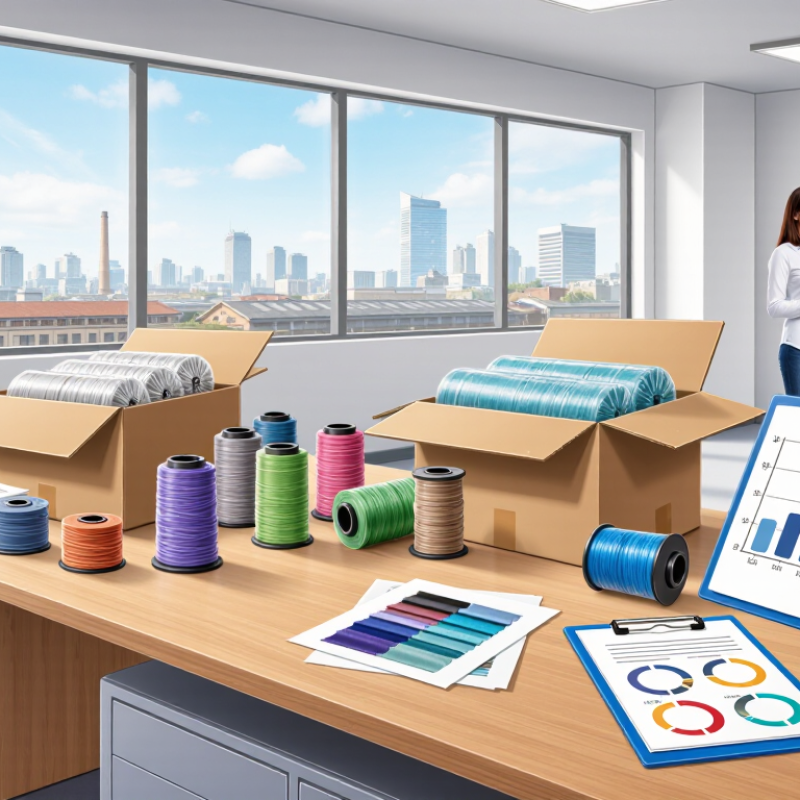
Rubber yarn combines stretch with controlled recovery, but “rubber” can mean different materials. Latex yarn uses natural rubber and often delivers a soft, lively feel. Spandex, also called elastane, uses polyurethane and offers more consistent processing. Neither choice wins every application.
Elongation commonly ranges from 100% to 1,000%, depending on polymer, yarn construction, test method, and load. A 500% figure means five times the original length, not permanent stretch.
ASTM D412 testing is widely used for rubber materials, yet buyers should confirm gauge length, speed, temperature, and recovery time. Testing details matter.
Count can be confusing. Suppliers may describe rubber yarn by diameter, dtex, denier, or a traditional rubber-thread number. Compare linear density and actual dimensions, not the label alone. A finer yarn may fit a narrow waistband, while a heavier count can provide stronger compression. Check elongation at break, tension at specified extension, and aging performance.
Textile Exchange reported global fiber production at about 124 million tonnes in 2023, with continued growth projected toward 2030. Grand View Research also identifies expanding demand for spandex in apparel and technical textiles. These figures show scale, not suitability.
A neat specification can still mislead. Request a sample, wash it, stretch it repeatedly, and measure recovery after 24 hours. Small testing gaps create expensive surprises.
A reliable ranking starts with measurable evidence, not attractive samples. GSM affects fabric coverage, recovery, and production cost. Suppliers should provide GSM results from controlled laboratory testing. Tensile strength must be reported with elongation and modulus. ASTM D412-16(2021) provides recognized methods for evaluating rubber materials under tension. I would request original test curves, because one final tensile value can hide uneven performance.
MOQ and lead time reveal operational reliability. A supplier offering a low MOQ may charge more for custom colors or covered yarn structures. Buyers should compare production windows, shipping preparation, and documented delay records. The International Rubber Study Group’s 2024 statistical bulletin places global natural rubber output near 15 million tonnes in 2023. That scale supports supply, but it does not guarantee consistent yarn quality. My ranking would therefore reward batch traceability and repeat test results.
Tips: Ask for three recent GSM records and ASTM D412 results from different lots. Confirm whether tensile values apply before or after textile processing. Request a small trial order before approving bulk production. Check lead time against actual delivery history, not promises. One weakness remains: public reports rarely disclose yarn-level defect rates, so buyers must verify this independently. A neat spreadsheet cannot replace hands-on inspection.
Top 10 Rubber Yarn Suppliers for Global Buyers?
Asia remains the center of the natural rubber supply map. Industry summaries often place the region’s broader rubber output above 15 million tonnes in 2023. However, the International Rubber Study Group and ANRPC use different country coverage and product definitions. Their natural rubber estimates are lower than that headline figure. The number needs careful reading.
Thailand, Indonesia, Vietnam, China, India, and Malaysia remain important Asian production bases. ANRPC data shows that weather, replanting, and smallholder harvesting strongly influence annual supply. A dry plantation road can delay latex collection by several days. That delay affects viscosity, moisture, and delivery schedules.
For buyers comparing rubber yarn suppliers, production volume is only one filter. Check latex concentration, yarn count, elongation, tensile strength, and covered-yarn recovery. Ask for recent laboratory reports, not only catalog specifications. The International Rubber Study Group’s statistical publications can support market benchmarking, while shipment records reveal practical reliability. Suppliers near major ports may offer smoother export planning, but inland producers can provide competitive sourcing options. This is where many purchasing teams make mistakes: they compare prices before checking crop-season risks, testing methods, and minimum order quantities. A dependable supplier should explain these limits clearly. Small details matter.
A reliable top-10 shortlist should compare capacity, certifications, export markets, and product fit. Capacity matters, but larger output does not guarantee better yarn. Buyers should request monthly production figures, typical lead times, and backup plans for latex or rubber supply. A supplier producing 2,000 kilograms monthly may suit a small hosiery program better than a factory focused on container-scale orders.
Product details require close inspection. Ask about rubber yarn diameter, elongation, recovery, covered yarn options, and recommended operating temperatures. Samples should be tested after washing, stretching, and repeated use. Suitable applications may include underwear, socks, sportswear, medical textiles, and industrial elastic products. The best supplier depends on the fabric structure, not only the quoted price.
Certifications should be checked against the actual factory and product scope. ISO 9001 can support quality management, while OEKO-TEX or similar testing may help with restricted-substance requirements. Environmental claims need supporting documents. Export experience in Asia, Europe, North America, or the Middle East can simplify packaging and documentation, but market familiarity is not proof of consistent quality. Request recent test reports, inspection records, and customer references where permitted. A low price may look attractive. It can become expensive after uneven tension, broken filaments, or delayed shipments appear. No checklist is perfect, and supplier performance should be reviewed after every production batch.
Global buyers comparing the top ten rubber yarn suppliers should begin with documented compliance, not attractive catalogs. Ask for current REACH declarations and check whether they cover every dye, coating, and chemical treatment. Request OEKO-TEX documentation with its certificate number, product scope, and expiry date. A certificate copied into a sales presentation proves very little.
ISO 9001 can indicate controlled processes, but it does not guarantee perfect yarn. Review the audit scope, corrective-action records, and traceability system. Ask how each production lot is labeled from raw material intake to shipment. I recommend testing samples for elongation, recovery, breaking strength, odor, and color consistency. Test after washing too. Results can change.
Pricing needs more than a kilogram figure. Confirm yarn count, rubber core size, covering material, minimum order quantity, packaging, payment terms, and delivery conditions. Calculate freight, customs charges, laboratory testing, inspection fees, storage, and possible rework. These costs often exceed the original price difference. A low quote may become expensive after delays or defective rolls. I once treated a small defect rate as insignificant; later, replacement labor changed the calculation. Buyers should request a pilot order and compare actual yield against the quotation. Keep every promise in writing, including tolerances and delivery dates.
Rubber yarn is an elastic textile yarn designed to stretch and recover. It may use natural latex or polyurethane-based elastic material. The hand feel and processing behavior can differ greatly.
Elongation commonly ranges from 100% to 1,000%. A 500% result means five times the original length. It does not guarantee permanent stretching.
No. Higher elongation may reduce control or recovery in some products. The best value depends on tension, construction, and end use. More stretch is not always better.
Confirm the test length, pulling speed, temperature, and recovery time. Use the same conditions when comparing samples. Testing details matter.
Suppliers may use diameter, dtex, denier, or traditional thread numbers. These labels are not always directly comparable. Check linear density and measured dimensions.
A finer yarn may fit a narrow waistband more neatly. A heavier yarn can create stronger compression. Test the waistband after repeated stretching and washing.
Request elongation at break, tension at a specified extension, and recovery data. Aging performance also matters. A catalog can still mislead.
Wash the sample and stretch it repeatedly. Measure recovery after 24 hours. A small testing gap can create an expensive surprise.
Weather, replanting, and smallholder harvesting can change annual supply. Dry plantation roads may delay latex collection. Delays can affect moisture, viscosity, and delivery schedules.
No. Compare concentration, count, elongation, tensile strength, recovery, reports, and minimum order quantities. Check shipment reliability and port access too. Price-first decisions often fail.
Rubber Yarn is a flexible textile material commonly made from natural latex or synthetic spandex, offering exceptional stretch performance ranging from 100% to 1,000%. This guide explains how yarn type, count, GSM, tensile strength, and recovery affect applications such as apparel, medical textiles, sportswear, and elastic accessories. It also introduces practical criteria for comparing the top ten global suppliers, including production capacity, minimum order quantities, lead times, quality consistency, and ASTM D412 testing.
With Asia producing more than 15 million tonnes of natural rubber in 2023, the region remains a major sourcing hub for rubber-based materials. Buyers can use the supplier comparison to match product capabilities with market needs while reviewing certifications such as REACH compliance, OEKO-TEX, and ISO 9001. The guide also emphasizes transparent pricing, shipping, testing, and other total-cost factors, helping purchasers complete effective due diligence and select dependable Rubber Yarn partners for long-term supply.

Yibang Textile